
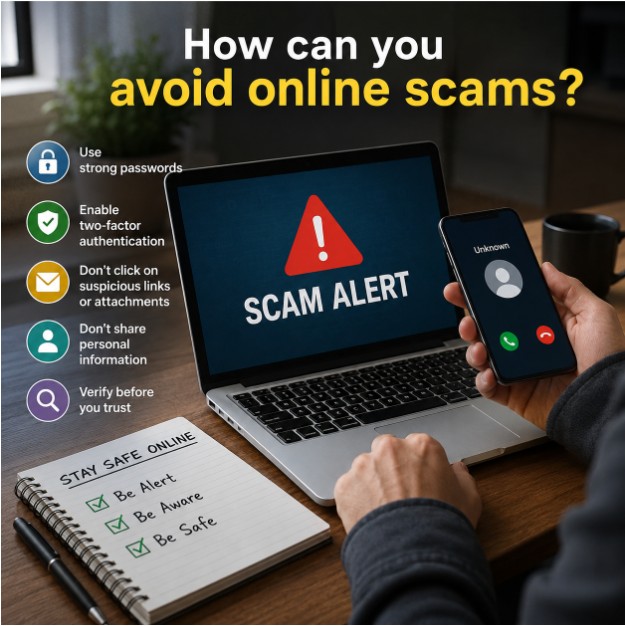
Have you ever got a friend request from someone you don't know? And their profile picture looks too perfect?
Yeah. That happens to almost everyone.
Fake online profiles are everywhere today. On Facebook. On Instagram. On dating apps. Even on LinkedIn.
Some fake profiles just want followers. Others want your money. Some want your personal information.
So how can you spot fake online profiles before they trick you?
In this article, we will explain it step by step. In very simple words. No hard English. No boring theory. Just real, practical tips you can use today.
Let's understand this step by step.
Before we spot them, let's understand why they exist.
People create fake profiles for many reasons:
Once you understand why they exist, it becomes easier to spot how they behave.
Now let's look at the real signs.
This is the first thing you should check. Always.
Fake profiles almost always use stolen or fake photos.
Here's what to look for:
Here's a simple tip. Copy the profile picture. Go to Google Images. Click the camera icon. Upload the photo.
If the same photo appears on many other websites, or under different names, it's a fake profile. Simple as that.
This one trick alone can save you from most scams.
Every social media account shows when it was created.
Fake profiles are usually very new. Created a few days or weeks ago.
Real people usually have accounts that are years old. With years of activity.
Ask yourself:
If yes, that's a warning sign.
This one is very easy to check.
Fake profiles usually have:
Real accounts have a natural mix. Some close friends. Some random people. Regular likes and comments from real humans.
If a profile has 10,000 followers but each post gets only 2 likes, something is wrong.
Fake profiles often have bios that sound strange or generic.
Watch out for:
Also check their posts.
Real people post about their daily life. Fake accounts often post:
If everything feels copy-pasted, it probably is.
This is very important, especially on dating apps or social media chats.
Scammers often follow a pattern:
Sound familiar? This is one of the most common online scams today. It's called catfishing.
Golden rule: If someone refuses a video call after weeks of talking, that's a huge red flag.
Real people don't mind a quick video call. Fake profiles always find an excuse.
This step is often skipped, but it's very useful.
Look at who they are friends with.
Fake accounts usually have:
Real people usually have friends from their school, work, family, and local area. It creates a natural pattern.
Fake accounts don't have this natural pattern. It looks random and messy.
Fake profiles often make small mistakes. Because they are lying, and lies are hard to keep straight.
Compare different parts of their profile:
For example, someone claims to be a doctor in New York. But all their photos show them somewhere else. And their English has grammar patterns common in scam messages.
These small mismatches are big clues.
This applies more to business or shopping profiles.
If a page is offering:
Be extra careful.
Real businesses rarely offer crazy discounts every single day. Scam pages use fear and urgency to make you buy quickly, without thinking.
Quick tip: Check their reviews and comments section. Real businesses have real customer replies, both good and bad. Fake pages often have fake, generic comments, or comments are turned off completely.
Verified badges (blue ticks) can help. They show the platform confirmed the identity.
But remember: not having a badge doesn't always mean fake. And having a badge doesn't always mean 100% real either, since some badges can be bought now on certain platforms.
Use it as one small clue. Not the only clue.
Here's something important. Your instincts matter.
If something feels off, it probably is.
Maybe you can't explain why. Maybe it's just a feeling. But that feeling often comes from small details your brain notices, even if you don't consciously see them.
Don't ignore that feeling.
Let's say Sarah gets a message from "Mark" on Instagram.
Mark says he's a US Army officer stationed abroad. He has a handsome profile picture. Talks sweetly. Says he loves her within one week.
Red flags already:
After two weeks, Mark asks for money to "pay for a flight ticket" to visit her.
This is a textbook fake profile pattern. Thousands of people fall for this exact scam every year.
If Sarah had done a reverse image search on his photo, she would have found the same picture used by 10 other fake profiles.
Found a fake profile? Here's what you should do:
Save this list. Use it anytime you feel unsure about a profile.
Fake online profiles are not going away. If anything, they are getting smarter every year.
But you don't need to be an expert to protect yourself. You just need to know what to look for.
Check the photo. Check the activity. Check how they talk to you. Trust your instincts.
A few minutes of checking can save you from months of trouble, heartbreak, or financial loss.
Stay alert. Stay safe. And share this guide with someone who needs it too.