
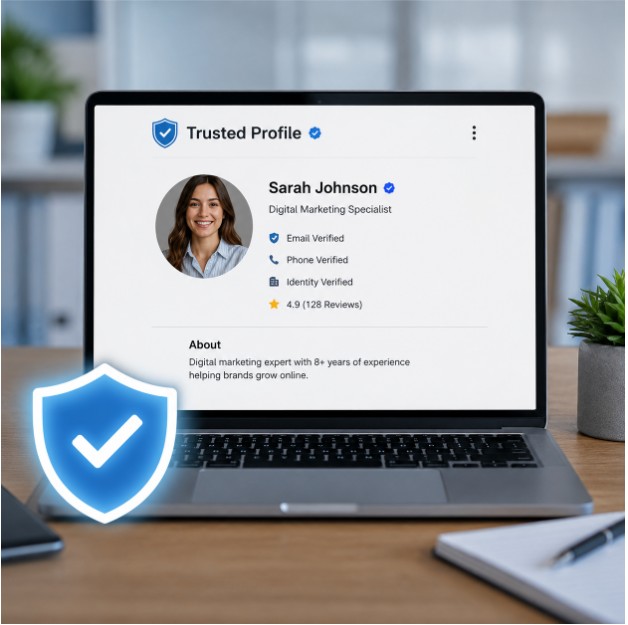
Have you ever visited a profile on Instagram, LinkedIn, or a dating app and thought, "Is this person even real?"
You are not alone. Millions of people ask this question every day. Fake profiles, scam accounts, and bots are everywhere online. So it is normal to feel unsure.
In this article, we will answer the big question: what makes an online profile trustworthy?
We will explain it in a simple way. No hard words. No boring talk. Just clear, useful facts you can use today.
Let's understand this step by step.
Think about real life for a second.
When you meet a new person, you check small things. How they talk. How they look. How they behave. This helps you decide if you can trust them.
Online, it works the same way. But you don't have a face-to-face meeting. So you must judge trust using other signs.
A trustworthy profile matters for many reasons:
Trust is the foundation of every online relationship — whether it's business, dating, or social media.
Let's go through the real factors that build trust. These are the same signs that experts, cybersecurity teams, and social platforms look for too.
This is the first thing people notice.
A trustworthy profile usually has:
Ask yourself: does this photo look like a real human, doing normal things? If yes, that's a good sign.
Fake profiles often use:
Would you trust a shop with no name, no address, and no phone number? Probably not.
Online profiles work the same way.
A trustworthy profile usually has:
Empty or half-filled profiles are a warning sign. Real people usually take time to complete their profile.
Here's a simple rule: older accounts are usually more trustworthy than brand-new ones.
Why? Because:
So next time, check when the account was created. If it's very new and asking for money or personal details, be careful.
A trustworthy profile shows real, human-like activity over time.
Look for:
Bots and fake accounts often show strange patterns. For example, posting the exact same message every hour. Real humans don't behave like that.
Big platforms like Instagram, X (Twitter), and Facebook offer verification badges.
This blue tick means the platform has checked the identity of that account. It's not 100% proof, but it does add trust.
However, don't rely only on the badge. Some platforms now let anyone pay for verification. So always double-check other signs too.
Would you trust a person with zero friends and zero followers, who suddenly messages you? Probably not.
Trustworthy profiles usually have:
If someone has 10,000 followers but zero comments or likes, that's a red flag. It usually means fake followers were bought.
What does the person post? Is it useful, real, and relevant?
Trustworthy profiles usually share:
Scam profiles often post:
If it sounds too good to be true, it usually is.
This might surprise you, but grammar mistakes can be a warning sign — especially in messages that ask for money or personal information.
Many scam messages come from templates translated into different languages. So they often sound strange or robotic.
Of course, non-native speakers can also make small mistakes — that's completely normal and doesn't mean they are fake. But if the entire message feels copy-pasted or overly formal in an unnatural way, be cautious.
Real people don't rush you.
Scammers often use pressure like:
Trustworthy people give you time. They don't panic you into quick decisions.
Different platforms have different trust signals. Let's break it down simply.
LinkedIn:
Instagram/Facebook:
Dating apps:
E-commerce/seller profiles:
Here's a simple checklist you can use anytime:
Even smart people get fooled sometimes. Here's why:
Mistake 1: Trusting good looks only A nice photo doesn't mean the person is real. Scammers often use attractive photos on purpose.
Mistake 2: Trusting high follower count Followers can be bought. Always check engagement (likes, comments), not just numbers.
Mistake 3: Ignoring gut feeling If something feels "off," don't ignore it. Your instinct is often right.
Mistake 4: Rushing decisions Never send money or personal details in a hurry. Take your time to verify.
It's not just users who care about trust — big platforms invest heavily in this too.
Cybersecurity experts and trust & safety teams at companies like Google, Meta, and LinkedIn use:
This is why platforms keep adding features like blue ticks, phone verification, and two-factor authentication. It's all part of building a safer, more trustworthy internet — for everyone.
So, what makes an online profile trustworthy?
It's not just one thing. It's a mix of:
The internet can feel confusing sometimes. But once you know these signs, you can judge any profile with more confidence.
Next time you see a new profile, don't judge too fast. Check the small signs. Take your time. Trust your instinct.
Because in the online world, just like real life — trust is earned, not given.